
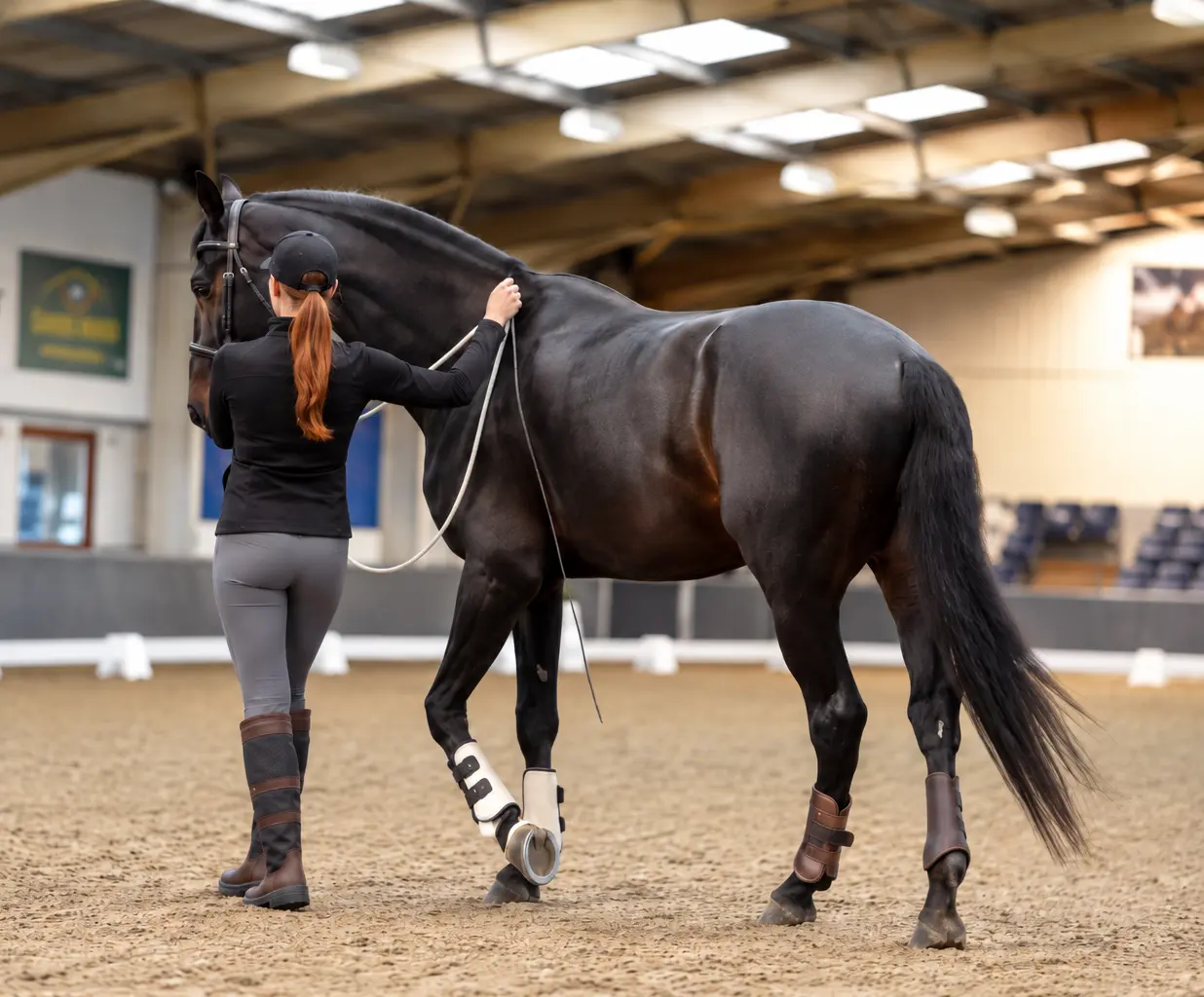
As a rider, it can be deeply frustrating when your horse feels constantly heavy on one rein, struggles to take a specific lead, or stiffens up during work. It's easy to label these behaviors as stubbornness or lack of obedience. However, in most cases, resistance under saddle isn't a behavioral flaw. It's a physical response to underlying asymmetry, postural instability, or compensation.
Understanding the difference between behavioral resistance and a biomechanical movement issue allows you to address the root cause of the problem instead of fighting your horse's body.
Behavior as communication: decoding stiffness under saddle
Horses are masters of compensation. When a horse experiences discomfort, tightness, or muscular weakness in one area, they alter their posture and movement to protect that body part. Over time, these compensatory movement patterns become ingrained habits.
Common signs that your horse is dealing with a chronic movement or balance issue include:
- Sticking on one rein: Feeling like one rein is made of iron while the other is completely slack.
- Hollow or rushing transitions: Elevating the head and dropping the back when asked to trot or canter.
- Crookedness on straight lines: Haunches swinging off the track or shoulders falling out on circles.
- Inconsistent contact: Bracing against the bit, grabbing the reins, or refusing to step into hand contact.
When you notice these patterns, forcing the horse into shape with stronger aids usually escalates tension. Instead, evaluating the horse's biomechanics helps you pinpoint where the kinetic chain is breaking down.
Asymmetry and the stiff-rein phenomenon
Almost every horse is naturally asymmetrical, possessing a crookedness similar to right- or left-handedness in humans. One side of the body acts as the primary supportive side, while the other side is more mobile.
When a horse feels stiff on the left rein, the issue rarely lies in the jaw or neck. It's often caused by weakness in the right hind leg or a dropped shoulder. Because the horse can't support its weight evenly behind, it relies on the rider's left hand for balance.
Addressing the stiff rein requires systematically strengthening the weaker hind leg and restoring lateral flexibility through the spine rather than pulling on the mouth.
Managing symptoms and building supporting muscle
Managing complex movement issues isn't about promising a quick fix or total cure. Instead, it's about using classical dressage and biomechanical exercises to manage symptoms, reduce physical stress, and build appropriate supporting muscles.
- In-hand gymnastics: Working on the ground removes the rider's weight, making it easier for the horse to find balance. Exercises like in-hand shoulder-in and yield to the bit help loosen restricted shoulder girdle muscles.
- Developing the thoracic sling: Without a collarbone, a horse's front end is supported entirely by muscles and fascia. Exercises that invite the horse to lift the base of the neck strengthen this suspension system.
- Targeted lateral work: Ridden leg-yields, shoulder-in, and haunches-in help equalize strength between both hind legs, gradually reducing the need for compensatory bracing.
When to involve your veterinary care team
Biomechanical training works hand in hand with veterinary medicine. If your horse shows sudden changes in movement, persistent lameness, or severe resistance, consult a veterinarian first.
Diagnostic workups, body and gait evaluations, and axial skeleton treatments help identify underlying joint or muscular issues. For specialized diagnostic assessments and mobile veterinary evaluation, explore options through our partners at Kinetic Equine Medicine. Once medical issues are diagnosed and managed, structured training helps rebuild correct movement patterns.
Restore balance and comfort with Seven Hills Training
At Seven Hills Training, we use classical dressage principles and equine biomechanics to help horses move with greater comfort, balance, and ease.
Whether you're managing complex movement issues, addressing chronic stiffness, or seeking to improve your riding aids through in-person or virtual lessons, our structured, low-drama approach provides clear answers for both you and your horse.
Visit Seven Hills Training today to learn more about our training options and schedule an assessment.
Back to all insights