
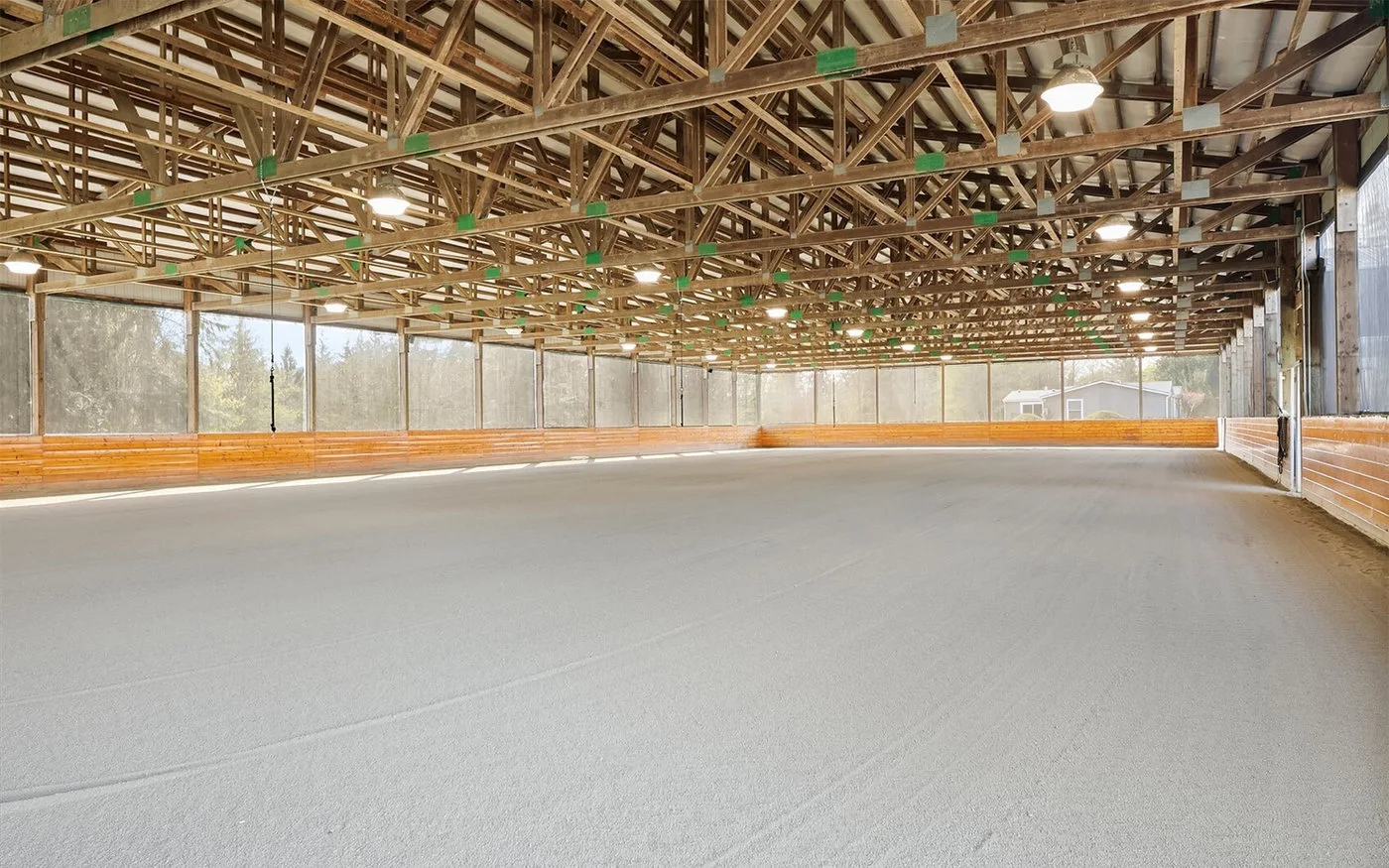
Training is often discussed as though it happens only between horse and rider. The environment is part of the conversation too. Noise, traffic, unfamiliar horses, and constant interruptions all change how much attention and emotional capacity a horse can bring to the work.
A quiet arena does not remove every challenge, nor should it. It creates a setting in which horse and rider can first build understanding without unnecessary pressure.
Attention is a limited resource
A horse monitoring activity outside the arena has less attention available for a subtle aid. A rider anticipating another horse’s path may become guarded or late with a correction. Neither response is a character flaw; both reflect competing demands.
Reducing those demands makes communication clearer. The rider can use smaller aids, and the horse has more time to process them.
Confidence grows through predictable experiences
Sensitive horses often learn best when the early stages of an exercise are calm and repeatable. Predictability helps them remain below the point where tension overwhelms learning.
This does not mean avoiding novelty forever. It means establishing a secure foundation before gradually adding difficulty. Once the horse understands the task, that understanding is more likely to remain available in a busier environment.
Riders benefit from privacy too
Adult riders can carry a surprising amount of self-consciousness into the arena. Worrying about being watched, getting in someone’s way, or making a mistake can create tension that the horse immediately feels.
A private setting gives the rider room to ask questions, repeat an exercise, and focus on sensation rather than appearance. That freedom supports better learning and often produces quieter riding.
Observation becomes more precise
In a calm arena, subtle changes are easier to notice. The trainer can see whether a horse’s rhythm changes in a particular corner, whether the rider braces before a transition, or whether fatigue begins to affect alignment.
Those observations lead to more individualized decisions. The work can be adjusted before a small loss of balance becomes a larger conflict.
Quiet is not the same as sheltered
Horses still need appropriate exposure to varied environments. Trail rides, clinics, travel, and shared spaces can all develop confidence. The point is to introduce those demands intentionally rather than allowing distraction to dominate every training session.
A quiet arena offers something increasingly valuable: enough space for horse, rider, and trainer to pay attention. When the environment supports focus, the work can become more precise, more humane, and more productive.
Back to all insights