
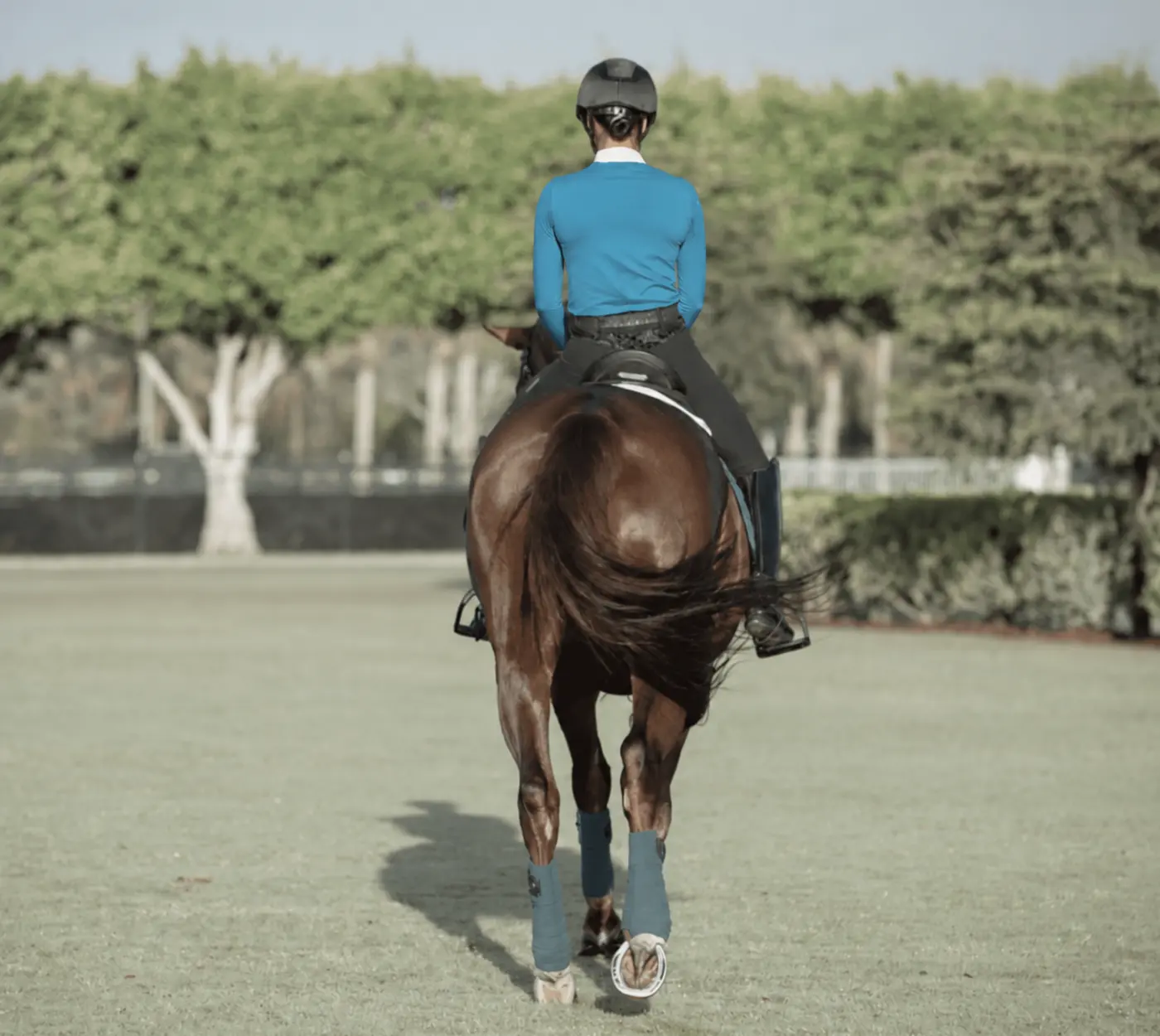
A good warm-up is not simply the part of the ride that happens before the real work begins. It is the first conversation of the session: an opportunity to notice how the horse feels today, establish a shared rhythm, and prepare the body for greater effort.
The details will change from horse to horse and from day to day. What matters is not following a fixed sequence, but understanding what the warm-up is meant to accomplish.
Begin with information, not correction
The first several minutes tell you a great deal. Is the walk regular? Does the horse move willingly forward without rushing? Is one direction easier? Does the back begin to swing, or does the horse feel guarded through the trunk?
Instead of immediately correcting every asymmetry, observe the pattern. A horse may need more time to settle, a simpler line, a longer walk, or a quieter contact. The warm-up should help you choose the day’s work rather than force the horse into yesterday’s plan.
Prepare the whole body
Warm-up is often treated as a cardiovascular task, but it also prepares the horse’s postural system. Gradual changes of direction, large figures, transitions within and between gaits, and moments of lengthening can encourage the neck, rib cage, back, pelvis, and limbs to coordinate more effectively.
The horse should begin to feel more available: easier to steer, more responsive to a light aid, and better able to maintain rhythm without being held together by the rider.
Use transitions as a check, not a test
Early transitions can reveal whether the horse is listening and whether the rider is organized. They do not need to be dramatic. A few clear walk-halt-walk or walk-trot transitions can show whether the horse stays in balance, braces, anticipates, or loses the line.
If a transition repeatedly creates tension, simplify it. Improve the preparation, rebalance the rider, and ask again. Repeating the same transition without changing anything rarely makes it better.
Look for readiness, not a particular outline
A horse is not warmed up because the neck has taken a certain shape. Readiness is better judged by function. The breathing is easy. The rhythm is dependable. The contact becomes more elastic. The horse can adjust the stride without losing balance, and the rider can influence the body without increasing force.
Some horses find this state quickly. Others need more time, especially when they are older, returning to work, naturally anxious, or managing a history of stiffness.
Let the warm-up shape the ride
A useful warm-up leaves you with a clearer horse and a clearer plan. It may confirm that the horse is ready for more collected work, or it may suggest that the most productive session is a quiet day of transitions, stretching, and basic alignment.
Good training responds to the horse in front of you. When the warm-up is treated as assessment and preparation rather than a routine to complete, the rest of the ride becomes more focused, fair, and effective.
Back to all insights