
When a performance horse steps out of active competition or training due to injury, illness, or strain, the road back to full work can feel daunting. Reaching the end of stall rest or hand-walking is a major relief, but getting medical clearance is only the first phase. Transitioning from recovery to ridden performance requires a careful, systematic plan.
Without a careful, tailored approach, returning to work can accidentally trigger old compensatory habits, put stress on healing tissues, or lead to setback. Using structured ridden rehabilitation combined with classical dressage and equine biomechanics helps your horse return to work safely, smoothly, and with lasting strength.
Moving beyond medical clearance to functional readiness
Veterinary clearance indicates that damaged tissue, whether a tendon, joint, or ligament, has healed enough to tolerate stress. However, clinical healing doesn't automatically restore correct movement or postural control.
During recovery, horses alter their weight distribution to protect uncomfortable areas. These altered movement strategies quickly turn into ingrained habits, leading to:
- Reduced engagement and push from the hindquarters.
- Asymmetry and loss of flexibility through the back and neck.
- Muscle wasting along the topline and thoracic sling.
If you get back in the saddle and immediately ask for pre-injury movements, your horse will naturally rely on these protective habits. Structured ridden rehabilitation focuses on retraining the nervous system and rebuilding muscles in correct alignment before increasing training intensity.
Phases of a structured ridden rehabilitation program
Rebuilding fitness is a gradual process. Every horse progresses at their own pace, but a successful program follows a clear, logical sequence.
Phase 1: Groundwork and spinal alignment
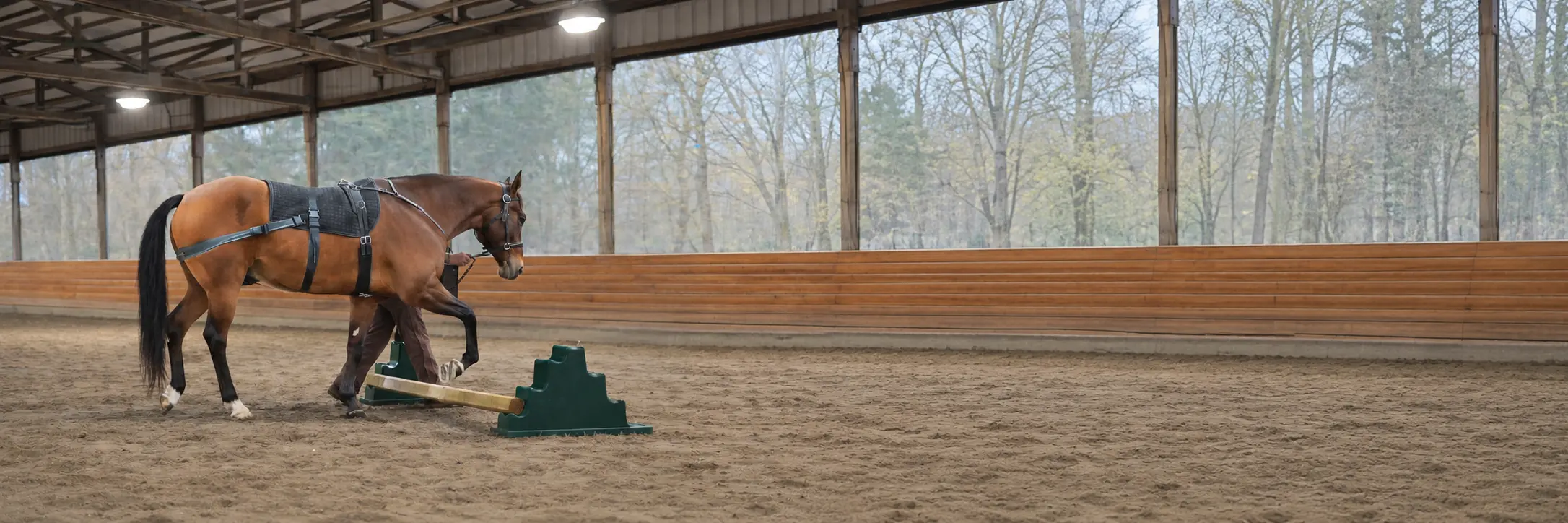
Before adding the weight of a rider, groundwork restores basic flexibility and core engagement. Exercises like in-hand shoulder-in, yield to the bit, and controlled pole work help activate the thoracic sling and encourage the horse to lift their back freely.
Phase 2: Ridden straightness and balance
Once the horse demonstrates balance on the ground, ridden work begins. Initial rides focus on straightforward, controlled gaits, large circles, and frequent, smooth transitions. The goal here isn't collection, but rather straightness, rhythm, and equal weight distribution across all four legs.
Phase 3: Gymnastic conditioning
As stamina improves, gymnastic exercises are introduced to rebuild targeted muscle groups. Lateral work, such as leg-yields and shoulder-in, strengthens the hindquarters and improves lateral suppleness, helping manage lingering stiffness or movement restrictions.
The role of team collaboration in equine recovery
A successful rehabilitation journey relies on consistent teamwork between your veterinarian, trainer, farrier, and bodyworker.
- Set clear benchmarks: Establish measurable goals for each phase of recovery, such as stride symmetry or duration of trot work.
- Monitor responses closely: Pay attention to how your horse recovers after each ride. Increased stiffness or warmth in a joint signals the need to ease back temporarily.
- Integrate professional care: Coordinate ridden work with ongoing veterinary evaluations, bodywork, and farrier adjustments to keep your horse comfortable as workload increases.
For specialized diagnostic monitoring, gait evaluation, and post-injury care coordination, learn more about our partner services at Kinetic Equine Medicine.
Rebuild strength and soundness with Seven Hills Training
At Seven Hills Training, we specialize in classical dressage, equine biomechanics, and structured ridden rehabilitation. We partner with horse owners and veterinarians to provide tailored rehabilitation programs for horses returning to work or managing complex movement issues.
Whether your horse needs a dedicated, full-service environment or you're looking for guidance to manage a ridden rehab plan, our structured, low-drama approach gives your horse the time, care, and biomechanical foundation they need to thrive.
Explore our training and rehabilitation options at Seven Hills Training to learn how we can support your horse's return to work.
Back to all insights