
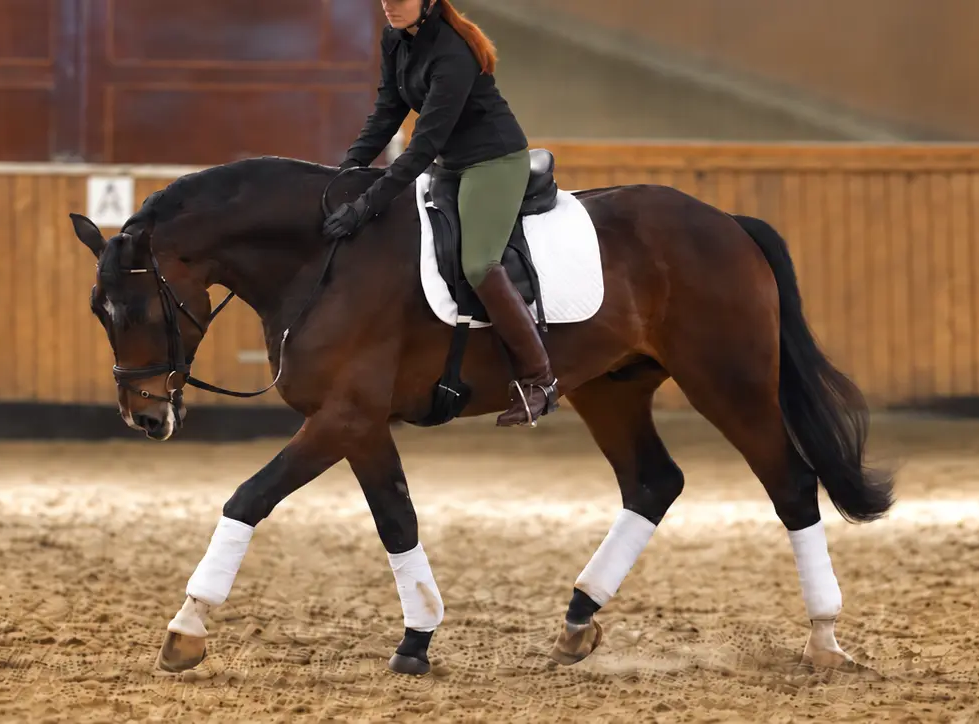
In dressage, connection is one of the most frequently discussed concepts, yet it remains widely misunderstood. Adult amateur riders are often told to hold a firmer rein, drive the horse forward into a closed hand, or flex the horse at the poll to create a pleasing frame.
In classical dressage, true connection isn't something created by your hands. It's the natural result of hind-limb engagement, spinal suppleness, and a relaxed back that allows energy to flow forward through the horse's whole body.
The difference between a forced frame and authentic connection
Many riders accidentally confuse a low neck position with genuine connection. When a horse gets pulled into a frame through rein pressure, the appearance of roundness is superficial.
Forced frame
- Heavy in the hand
- Hollow, rigid back
- Trapped hind legs
- Restricted breathing & jaw
Authentic connection
- Light, self-carrying contact
- Swinging, lifted back
- Active, engaged hindquarters
- Relaxed jaw and mobile poll
(c) 2026, Seven Hills Training, LLC
When a horse is forced into shape, the neck bends, but the back drops and the hind legs trail behind. This creates heavy, unyielding contact in the rider's hands and puts excessive strain on the horse's front legs.
Authentic connection works in reverse. Energy originates in the hindquarters, travels up through a swinging back and open shoulder, passes through a relaxed jaw, and meets a supportive, quiet hand. The reins simply receive and regulate the energy generated from behind.
The biomechanics of the connected topline
Understanding equine anatomy helps explain why pulling on the reins breaks true connection. A horse can't lift its back if its neck is restricted or pulled behind the vertical.
- Hind-end engagement: As the hind legs step forward under the horse's center of gravity, the pelvis rotates slightly downward.
- Abdominal activation: The abdominal muscles contract to lift the ribcage and support the thoracic sling.
- Spinal elevation: The dorsal muscles relax and stretch, allowing the vertebrae of the back to swing freely rather than bracing.
- Reaching for the bit: As the back lifts, the base of the neck opens, encouraging the horse to reach forward and down into soft contact.
When this biomechanical chain functions correctly, the horse feels weightless in your reins. You aren't holding the horse up; the horse supports its own balance in self-carriage.
Common rider habits that block connection
For adult amateur riders, unintended tension in your own body often prevents the horse from establishing a soft, trusting connection.
- Fixing or locking your wrists: A hand that stays rigid prevents the horse from chewing and relaxing its jaw.
- Gripping with your knees: Pinching through your knee or thigh tightens your seat, which signals the horse's back to contract.
- Riding front-to-back: Trying to control speed or neck shape before establishing forward rhythm and hindquarters activity.
Working on your posture and biomechanical alignment allows your seat to follow the horse's movement without interfering with the flow of energy.
Exercises to develop correct connection
Building a genuine connection requires patience, systematic groundwork, and ridden exercises that encourage the horse to use its core.
- Transitions within the gait: Adjusting stride length in the walk or trot tests whether the horse stays balanced on its own feet or relies on your hands.
- In-hand lateral work: Exercises like in-hand shoulder-in or yielding to the bit help loosen the shoulder and poll before you mount.
- Leg-yield to large circle: Moving laterally off your inside leg engages the horse's inside hind leg, encouraging them to step up and lift the back.
For a deeper look into the anatomical mechanics of collection and engagement, review the educational resource on the Biomechanics of Collection.
Develop lightness and feel with Seven Hills Training
At Seven Hills Training, we teach adult amateur riders how to achieve lightness, self-carriage, and true connection through classical dressage and equine biomechanics.
Whether you're riding a schoolmaster, leasing, or taking the next step in your riding journey, our clear, structured approach helps you build a harmonious partnership on any horse you ride. We offer both in-person and virtual lessons tailored specifically to how adult brains learn and process physical feel.
Explore our lesson and virtual coaching options at Seven Hills Training to start developing a lighter, more responsive connection today.
Back to all insights