
The end of daylight saving time can make an evening riding routine feel very different overnight. Add Puget Sound rain, a late finish at work, and a dark drive to the barn, and the ride you planned that morning becomes harder to fit in.
Keeping some consistency through fall and winter takes planning, but it also takes a willingness to adjust. Your winter schedule may look different from your summer one.
Plan for the week you actually have
Start with the time you can reasonably protect. If that means two rides this week, plan for two rides. Trying to squeeze a five-day program into them usually asks too much of both horse and rider.
Put barn time on the calendar before the week fills up. A regular lesson can provide an anchor. If you have flexibility, a daylight ride on the weekend or an occasional lunchtime session may be easier to maintain than relying entirely on evenings.
Give each ride a manageable priority. Work through an exercise from your last lesson or spend time on a difficult transition. A shorter session can still be useful when you leave enough time to warm up, pay attention, and cool down.
Make wet evenings easier
Some of the work happens before you get to the barn. Keep dry gloves and a change of socks in the car. Have your headlamp charged and your rain gear where you can find it. Small inconveniences become much more persuasive when you’re already tired.
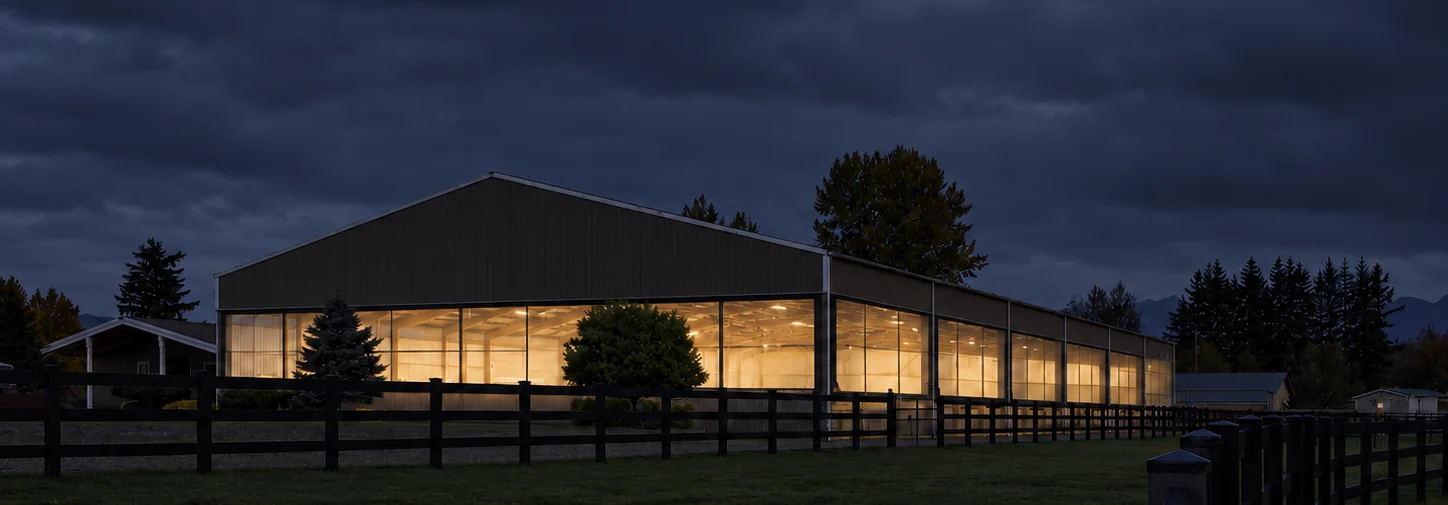
An indoor arena makes winter riding more practical, though getting there still takes effort. At Seven Hills in Monroe, our indoor arena is well lit, with new LED lighting installed last year, so riders can keep working after dark and out of the rain.
For haul-in riders, allow extra time for loading and travel. If the drive feels rushed or conditions make hauling a poor choice, change the plan.
Begin with the horse you have that day
Missed rides don’t create a debt that the horse needs to repay.
After a break or a less consistent stretch, begin with familiar work and notice how the horse feels. You may need to spend longer walking, simplify the session, or rebuild the workload gradually. A horse who was comfortable with a demanding ride in September may need a different plan after several weeks of interrupted work.
If your horse is following a prescribed rehabilitation program, discuss interruptions with the veterinarian rather than compressing the schedule to catch up.
Keep a connection to your lessons
When riding time is limited, instruction can help you decide what deserves attention and what can wait.
If hauling to Monroe is the obstacle, a virtual lesson can let you work with your trainer from your home arena. Recorded video review is another option when schedules don’t line up. Some riders combine occasional haul-in lessons with virtual sessions between visits.
Keep a few notes after each lesson: what you worked on, what helped, and what you want to ask next time. They give you somewhere to begin when several busy days pass between rides.
Give winter a realistic goal
You don’t have to make the same progress in December that you hoped for in July. Maintaining fitness, getting comfortable with an exercise, or riding regularly again after time away are worthwhile goals.
Choose something that fits your circumstances and revisit it as the season changes. A routine you can keep through a wet, dark week will serve you better than one that depends on everything going to plan.
Back to all insights