

Horses with Equine Complex Vertebral Malformation (ECVM), lower cervical variations, or associated first- and second-rib variations may struggle with balance, posture, coordination, and comfort long before the problem presents as obvious lameness. Owners may first notice subtle changes in movement, resistance under saddle, difficulty bending evenly, or an inconsistent “rein lameness” that is difficult to diagnose.
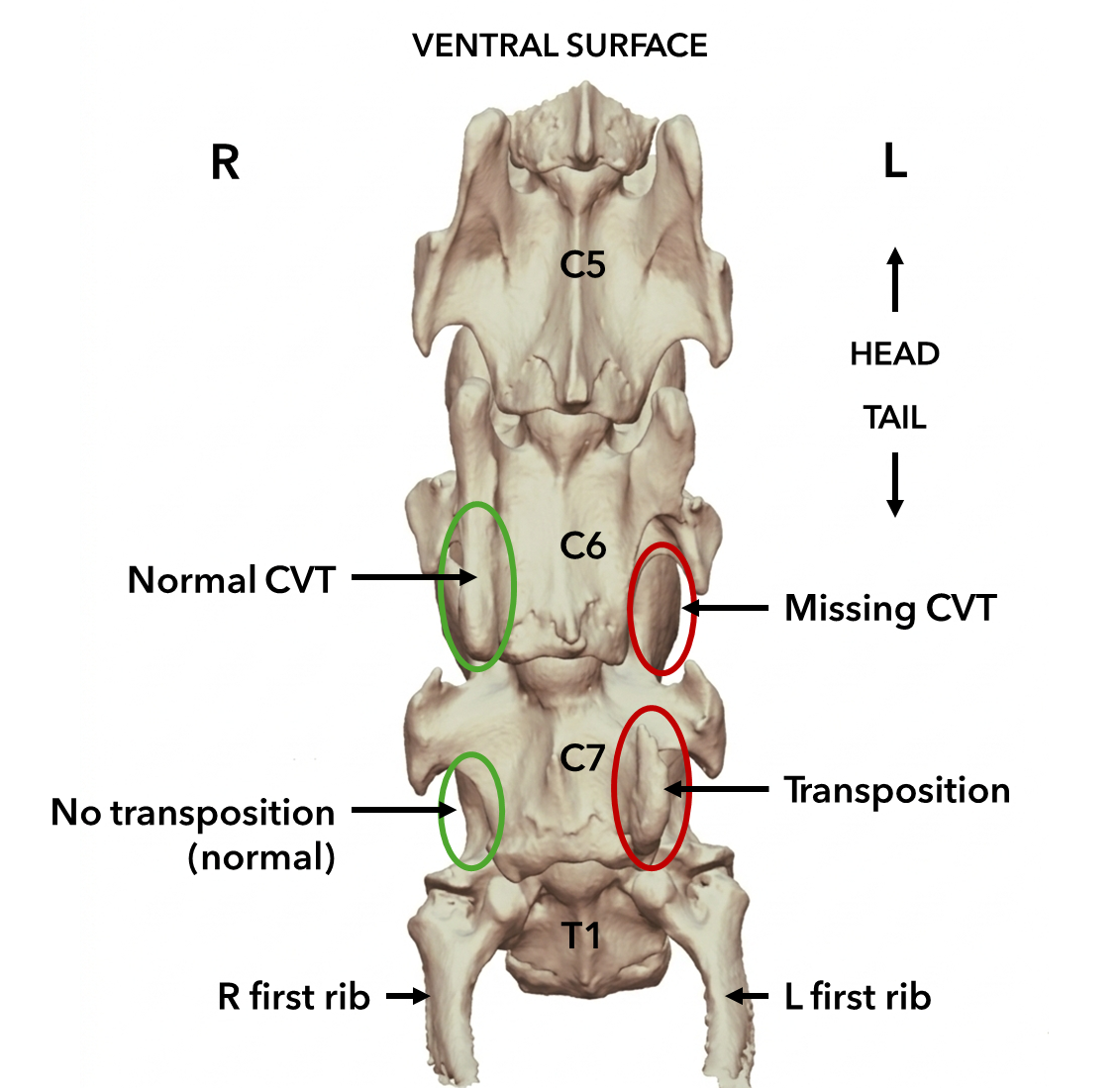
ECVM describes congenital variations involving the lower cervical vertebrae, most commonly C6 and C7. Not every horse with these variations is symptomatic, and imaging findings must always be interpreted by a veterinarian in the context of the individual horse. When a horse has been medically evaluated and cleared for active work, thoughtful movement rehabilitation can complement veterinary care.
Movement patterns commonly associated with ECVM
Lower cervical and rib variations can affect proprioception, alignment, and the way a horse organizes the neck, trunk, and limbs. The presentation varies, but owners and professionals may observe:
- Bracing through the neck and poll
- Inconsistent rhythm or apparent “rein lameness”
- Difficulty maintaining straightness or bending evenly
- Defensive behavior associated with physical discomfort
- Chronic tension, poor coordination, or unexplained performance changes
These signs are not diagnostic of ECVM. They can occur with many conditions, which is why veterinary assessment is an essential first step.
Why postural retraining matters
A horse that has moved with instability or discomfort may develop compensatory habits that remain even after medical treatment. Rehabilitation helps the horse explore a posture that feels safer and more sustainable. The goal is not to force the neck into a shape. It is to improve stability, coordination, and confidence through carefully graded work.
At Seven Hills Training in Monroe, Washington, ECVM rehabilitation draws on equine biomechanics, classical training principles, and learning theory. Each program is shaped around the horse’s veterinary findings, current capacity, response to exercise, and rate of progress.
A progressive approach to ECVM rehabilitation
Corrective in-hand work
In-hand work allows the horse to organize the body without carrying a rider. Exercises may focus on neck-base stability, core engagement, thoracic sling function, straightness, and reducing the habit of overloading the forehand.
Groundwork and motor learning
A low-stress learning environment gives the horse time to develop new motor patterns. Targeted postural exercises, transitions, pole work, and carefully selected movement tasks can improve proprioception and coordination while progressively strengthening the horse.
Ridden rehabilitation when appropriate
Once the horse demonstrates adequate stability and understanding on the ground, ridden work may be introduced. This phase emphasizes neutral balance, a lifted base of the neck, correct use of the back, and gradual conditioning without tension.
Veterinary collaboration
Medical diagnosis and treatment belong to the veterinarian. Movement rehabilitation is a complement to that care, not a substitute for it. Seven Hills works with referring veterinarians and collaborates closely with Kinetic Equine Medicine, which is located onsite. This supports communication between the veterinary and training teams as a horse progresses.
Which horses may benefit?
The ECVM rehabilitation program may be appropriate for horses with:
- Confirmed or suspected ECVM, including C6/C7 malformations or associated rib variations
- Chronic bracing, tension, or difficult-to-explain lameness patterns
- A need for structured reconditioning after injections, treatment, or surgery
Horses must be cleared by a veterinarian to return to active work. Seven Hills does not provide acute nursing care, wound management, stall-rest management, or primary medical treatment.
A purpose-built environment for recovery
Seven Hills is a quiet, private facility in Monroe serving horses from Snohomish County, Woodinville, the greater Seattle area, and Western Washington. Consistent footing, a full indoor dressage arena, dedicated rehabilitation spaces, and onsite veterinary collaboration support careful, year-round work.
If your horse is navigating an ECVM diagnosis or lower cervical variation, learn more about the ECVM rehabilitation program, explore equine rehabilitation at Seven Hills, or ask your veterinarian to use the professional referral form.
Back to all insights