
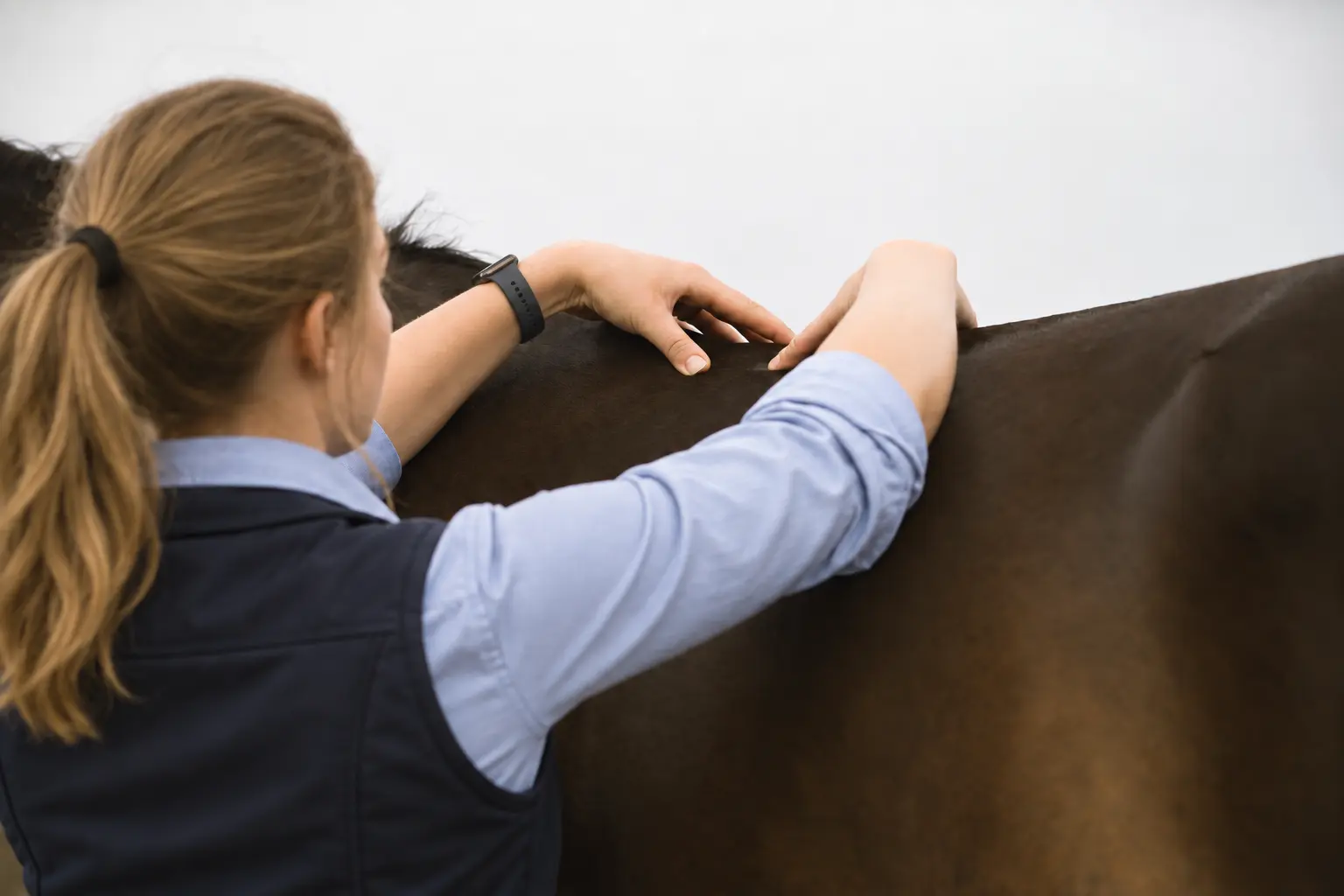
A diagnosis of kissing spine can be a turning point for horse and rider. Some horses show subtle performance changes, while others develop marked sensitivity, resistance, or behavioral changes under saddle. Veterinary treatment addresses the medical problem. Rehabilitation addresses how the horse moves afterward.
Kissing spine is commonly used to describe overriding or impinging dorsal spinous processes (ORDSP). The objective of the post-clinical phase is to help the horse develop the strength, coordination, and postural control needed to lift and stabilize the back during movement.
Possible signs of kissing spine
Owners commonly report girthiness or sensitivity along the back, resistance or bracing under saddle, difficulty bending or maintaining a canter lead, bucking or hollowing, and changes in attitude or willingness to work. These signs can have many causes and do not confirm kissing spine. A veterinary workup, hands-on examination, and appropriate diagnostic imaging are the right starting points.
The transition from medical care to movement
Kissing spine management often has two interconnected phases. A veterinarian may recommend medical management or surgery based on the horse’s clinical findings. Once the horse is cleared to resume active work, it must learn to use its body differently.
Without progressive postural reconditioning, a horse may remain in the guarded or braced movement patterns developed while in pain. Rehabilitation helps replace those compensations with more functional strategies rather than simply returning the horse to its previous workload.
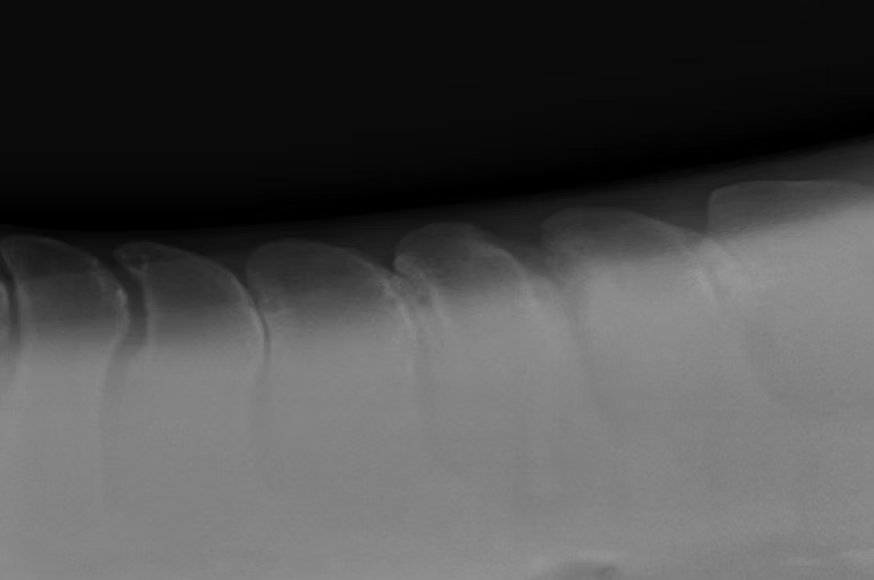
Building support from the inside out
A successful program develops the systems that support the spine rather than forcing a superficial outline. At Seven Hills Training, kissing spine rehabilitation combines classical training principles, biomechanics, and learning theory in a progressive framework.
Developing the thoracic sling
Specific groundwork helps strengthen the muscles that suspend the chest between the shoulders. Better thoracic sling function can support the trunk and create the conditions for the back to lift more effectively.
Core and multifidus strengthening
Targeted postural exercises encourage activation of the deep stabilizing muscles around the spine. The goal is to develop the strength and control needed to maintain a healthier relationship between the spinous processes during movement.
Ridden reconditioning
Once the horse is stable and confident on the ground, the program can progress to ridden work. Early ridden rehabilitation emphasizes balance, rhythm, and an active, elastic way of going. A productive long-and-low posture is created through forward energy and correct use of the body, not by forcing the head and neck into a shape.
Who may benefit from a structured program?
Kissing spine rehabilitation may support horses returning to work after:
- Interspinous ligament desmotomy (ISLD) or ostectomy
- Medical management such as injections, mesotherapy, or shockwave therapy
- A period of poor performance, chronic back tension, or cold-backed behavior associated with a veterinary diagnosis
Every horse must be cleared by a veterinarian for groundwork or under-saddle work before entering the program. Seven Hills does not provide acute nursing care, surgical wound management, or stall-rest management.
Can a horse with kissing spine be ridden again?
Many horses do return to ridden work, but the outcome and timeline depend on the individual diagnosis, treatment, previous movement patterns, conditioning, and response to rehabilitation. Progress should be guided by the veterinarian and adjusted to the horse in front of us rather than tied to a generic schedule.
Veterinary coordination and the rehabilitation environment
Seven Hills works with referring veterinarians and collaborates closely with Kinetic Equine Medicine, located onsite at our private Monroe facility. This creates a clear bridge between clinical care and physical reconditioning while allowing the horse’s primary veterinarian to remain involved.
Consistent footing, a full indoor dressage arena, dedicated rehabilitation spaces, and a quiet environment support structured year-round work for horses from Snohomish County, Woodinville, the greater Seattle area, and Western Washington.
Learn more about the kissing spine rehabilitation program, explore equine rehabilitation at Seven Hills, or ask your veterinarian to use the professional referral form.
Back to all insights