
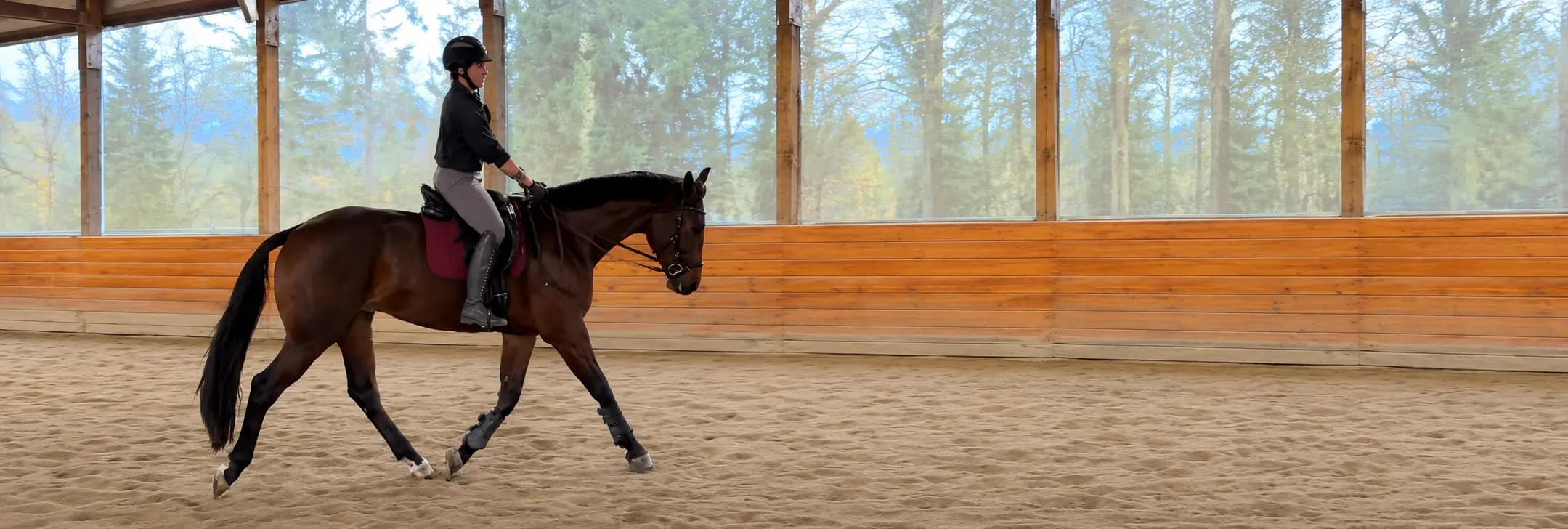
Transitions can reveal a rider’s balance more clearly than almost any other moment in a ride. Everything changes at once: the horse reorganizes its stride, the rider prepares an aid, and both bodies must stay aligned while the rhythm shifts.
When a transition feels abrupt, delayed, or unsteady, the instinct is often to correct the horse. But the rider’s timing, posture, and response to the change may be shaping the result.
Balance is not the same as holding still
A balanced rider is not rigid. The pelvis, hips, and spine remain responsive enough to follow the horse while the upper body stays organized over the rider’s base of support.
During a transition, riders commonly tip forward, lean back, grip with the thigh, or brace through the lower back. Each response changes the horse’s balance and can make the transition harder to complete.
Timing changes the conversation
An effective aid is prepared before the moment of transition. The rider organizes their own body, establishes the new rhythm mentally, and then gives the horse a clear request.
- Upward transitions require the rider to remain tall without driving the upper body forward.
- Downward transitions require the rider to stay centered without leaning back or pulling.
- Transitions within the gait ask the rider to influence stride length while preserving rhythm and relaxation.
If the aid arrives late, becomes too large, or continues after the horse has responded, the transition often loses clarity.
Where bracing begins
Bracing is often an attempt to feel secure. A rider may lock the knee, tighten the hip, hold the breath, or fix the hands when they anticipate a change. That tension interrupts the rider’s ability to follow and can cause the horse to hollow, rush, or fall onto the forehand.
Rather than trying to sit more forcefully, think about staying organized and available: eyes level, ribs stacked over the pelvis, legs quietly draped, and hands able to receive the change in balance.
A better way to practice transitions
- Prepare the transition several strides before asking.
- Notice whether you change your breathing or grip as you approach it.
- Use fewer aids, then evaluate the horse’s response.
- Repeat only while the quality remains good.
- Include frequent transitions between and within gaits instead of drilling one movement.
Good transitions are not simply obedience exercises. They are opportunities for horse and rider to rebalance together. When the rider’s timing and alignment become clearer, the horse has more room to respond with confidence.
Back to all insights