
Why Straightness Matters More Than Symmetry in Training
- Kyra Fraser

- Jan 29
- 2 min read
Riders often talk about symmetry as the goal of good training. While evenness is important, straightness is the more useful—and more achievable—standard when it comes to supporting sound, functional movement.
Straightness is not about making both sides identical. It is about helping the horse organize their body so forces are distributed more evenly through the limbs, joints, and musculature during work.
Straightness Is a Functional Concept
No horse is perfectly symmetrical. Differences in strength, coordination, and range of motion are normal. Straightness does not attempt to eliminate those differences—it works within them.
A straight horse is one that:
Tracks consistently through the body
Pushes evenly from behind relative to their structure
Maintains balance without drifting or bracing
This allows the horse to carry load more efficiently, even if one side remains naturally stronger.
Why Symmetry Alone Can Be Misleading
Chasing visual symmetry can sometimes mask underlying coordination issues. A horse may appear even in outline while still loading unevenly through the body.
Straightness, by contrast, is felt:
In clearer transitions
In steadier contact
In the horse’s ability to stay balanced on straight lines and gentle curves
These indicators reflect how well the horse is managing force, not just how the movement looks.
Straightness Develops Through Thoughtful Basics
Straightness is built through fundamental work—clear lines, consistent rhythm, and correct alignment of the body over the feet. It is supported by exercises that encourage the horse to step evenly under the body without force or exaggeration.
Progress comes from repetition done well, not from correcting every perceived uneven step. Over time, coordination improves and movement becomes more reliable.
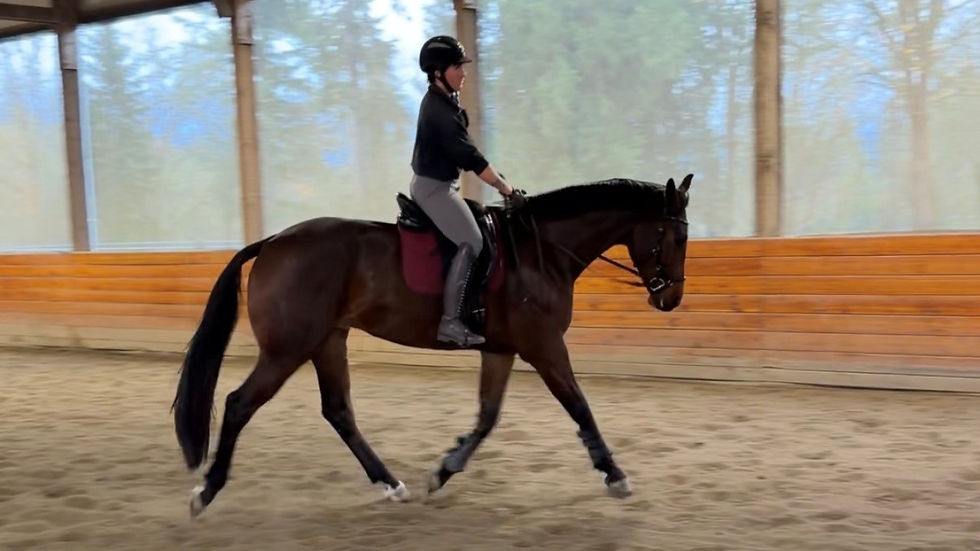
The Rider’s Role in Straightness
Straightness is influenced as much by the rider as by the horse. Uneven weight distribution, inconsistent rein contact, or unclear aids can unintentionally create crookedness.
When the rider focuses on balance, clarity, and timing, the horse is better able to organize their body without resistance. Straightness becomes a shared outcome, not something imposed.
Straightness Supports Long-Term Soundness
When a horse moves in a straighter, more organized way, strain is reduced. The body is better able to adapt to work, recover between sessions, and maintain consistency over time.
This is why straightness remains a priority at every stage of training—not as a visual ideal, but as a foundation for durability and comfort.
Final Thought
Perfect symmetry is neither realistic nor necessary. Straightness, however, offers a practical, attainable framework for supporting movement that is balanced, efficient, and sustainable.
When training prioritizes straightness over appearance, the result is a horse that moves with greater ease—and stays sound longer.


Comments